
The primary research interest of my group at Rutgers is to develop and integrate nanotechnologies and chemical functional genomics to modulate signaling pathways in cells (e.g. stem cells and cancer cells) towards specific cell lineages or behaviors. In particular, my group is interested in studying how microenvironmental cues (e.g. soluble signals, cell-cell interactions, and insoluble/physical signals) functionally affect stem cell fate. To fully investigate the complex cell behaviors, we are developing both approaches from nanotechnology-the "top-down" pattering of extracellular matrix (ECM) and signal molecules in combinatorial ways (e.g. ECM compositions, pattern geometry, pattern density, and gradient patterns), and the "bottom-up" synthesis of multifunctional nanoparticles and their modification with specific signal molecules (e.g. siRNA and small organic molecules). Collectively, our research program is directly relevant to matters concerning biomaterials, nanomedicine, chemical biology and stem/cancer cell biology.
Program Faculty
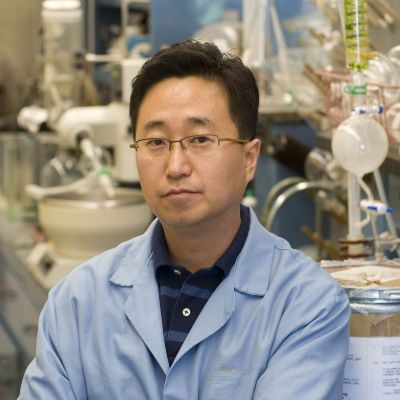
- KiBum Lee
- Distinguished Professor
- Department: Department of Chemistry and Chemical Biology
- Graduate Program(s): Biochemistry
- Major Research Interest(s): Drug Discovery, Gene regulation, Nanobiology / nanotechnology, Neurological disease, Stem Cells, Regeneration, and Tissue Injury
- Research Techniques: Atomic or Electron microscopy, Cell Biology, Clinical trials, Fluorescent and super resolution microscopy, Genetic engineering
- Research Organism(s): Cell lines, Humans, in vitro, Mice
- Rotation Faculty
- Phone: 1.8484452081
- Email:
This email address is being protected from spambots. You need JavaScript enabled to view it. - School of Arts and Sciences
- Chemistry & Chemical Biology, Room 3312
- 123 Bevier Road
- Piscataway, NJ 08854-8008
- Key Words: Chemical biology, Nanotechnology, Drug/Gene Delivery, Biomaterials/Tissue Engineering, Stem Cell Biology, Molecular Imaging, Synthetic Biology, and Functional Genomics
- Lab Site URL
- News Items: Better Biosensor Technology Created for Stem Cells, New Smart Drug Delivery System May Help Treatment for Neurological Disorders